
Spawning
Mushroom cultivation begins with a crucial step known as spawning. During this stage, mushroom spores are introduced to a nutrient-rich material called the substrate. The substrate, often made from agricultural by-products like straw, sawdust, or coffee grounds, acts as a foundation for mushroom growth. Proper sterilization of the substrate is essential to prevent contamination and ensure healthy development. Spawning is typically carried out in a controlled environment to promote the colonization of mycelium—the vegetative part of the fungus.
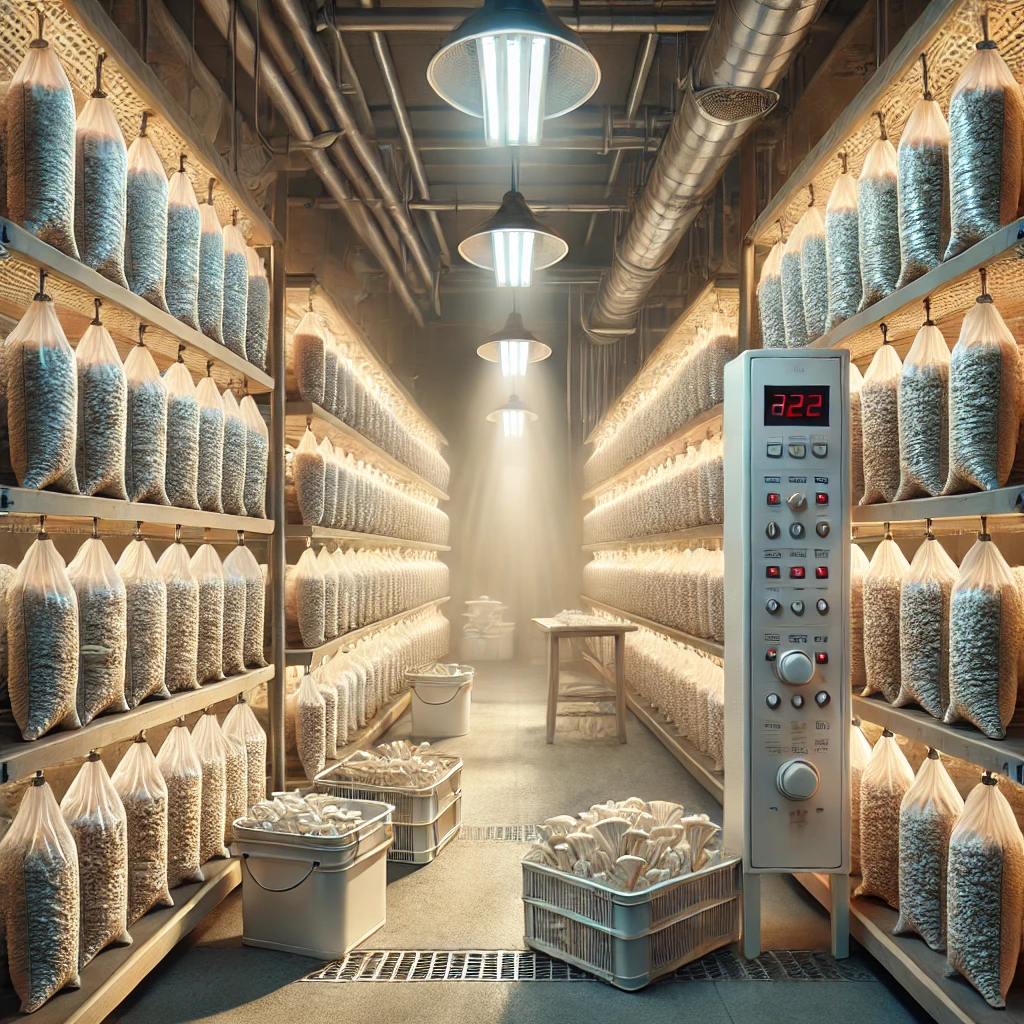
Table: Common Substrates for Mushroom Farming
Substrate Material Advantages Suitable Mushroom Types Straw Cost-effective, readily available Oyster, Button Sawdust Good for hardwood mushrooms Shiitake, Reishi Coffee Grounds Eco-friendly, high nitrogen content Oyster
Growth and Harvesting
After successful spawning, the growth phase begins. This stage demands optimal temperature, humidity, and ventilation, which vary based on the mushroom variety:
- Temperature: Typically ranges between 18-24°C for most species.
- Humidity: High humidity (80-90%) is crucial to prevent the substrate and mushrooms from drying out.
- Ventilation: Ensures the release of carbon dioxide and intake of fresh air, critical for mushroom development.
Growth duration varies:
- Oyster Mushrooms: 2-3 weeks
- Button Mushrooms: 4-6 weeks
Once matured, mushrooms are harvested by gently twisting and pulling them from the substrate, leaving the base intact to encourage regrowth.
Chart: Growth Stages of Oyster Mushrooms (Insert a visual chart illustrating the timeline from spore colonization to harvest.)
Economic and Environmental Benefits
The global mushroom market is projected to grow significantly, fueled by increasing health awareness and the shift towards plant-based diets. Here are some notable benefits:
- Economic Benefits:
- High returns per square foot.
- Steady demand due to versatility in culinary and medicinal uses.
- Environmental Benefits:
- Converts agricultural waste into valuable produce.
- Low carbon footprint compared to traditional crops.
- Contributes to circular economy practices.
Table: Mushroom Farming vs. Traditional Crops
Aspect Mushroom Farming Traditional Crops Space Efficiency High Moderate to Low Water Usage Low High Growth Cycle Weeks Months
Challenges and Opportunities
While mushroom farming is promising, it comes with its own set of challenges:
- Challenges:
- Contamination: Requires sterile conditions during spawning.
- Market Access: Finding consistent buyers can be difficult for small-scale farmers.
- Quality Control: Maintaining uniformity in size, shape, and texture is vital.
- Opportunities:
- Governments and agricultural organizations often offer subsidies and training programs.
- The rise of online marketplaces simplifies direct-to-consumer sales.
- Growing demand for organic and exotic mushrooms presents untapped potential.
Conclusion
Mushroom farming is an innovative and sustainable avenue for modern agriculture. With its minimal environmental impact, lucrative returns, and expanding market, it offers immense potential for farmers and entrepreneurs alike. By addressing challenges such as contamination and market access, and leveraging advancements in farming technology, mushroom cultivation can pave the way for a more sustainable and profitable future. For those exploring new agricultural ventures, mushrooms may well be the crop of the future.