
Agriculture is changing fast with artificial intelligence (AI). In 2025, farmers are using AI tools to grow more food, save water, and reduce waste. These tools help make farming smarter and more efficient.
In this blog, we will explore the top 10 AI tools that are revolutionizing farming in 2025.
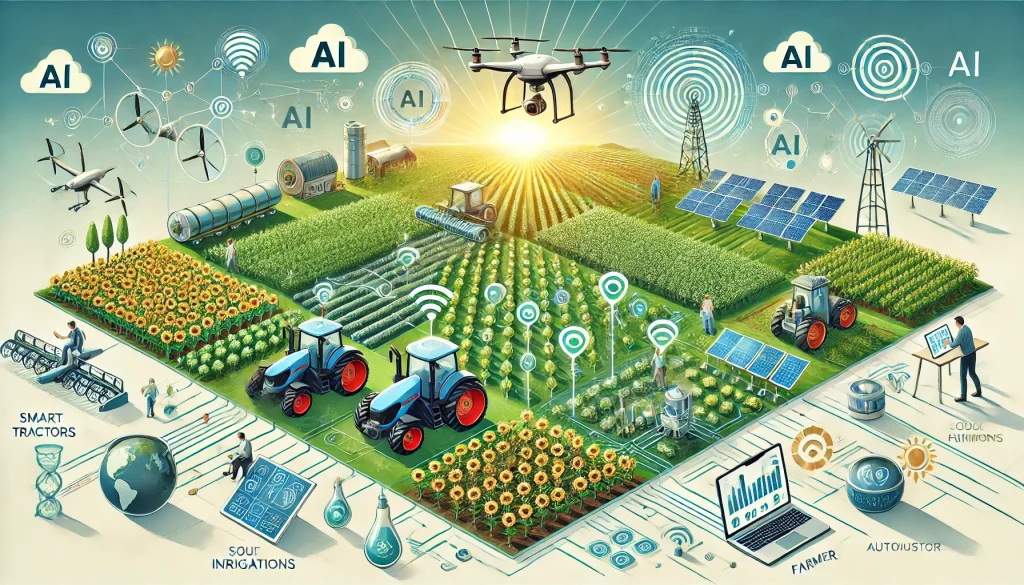
1. Precision Agriculture Systems
Precision agriculture uses AI to collect data and help farmers make better decisions. AI tools analyze soil, weather, and crop conditions. This helps farmers apply water, fertilizers, and pesticides only where needed.
Popular AI tools:
- PrecisionHawk – Provides drone-based crop analysis.
- CropX – Uses sensors and AI to monitor soil health.
Benefits:
- Saves resources.
- Increases crop yields.
- Reduces environmental impact.
2. Autonomous Tractors and Machinery
Self-driving tractors and robots are changing farming. These machines use AI to plant, water, and harvest crops with little human help. They can work day and night with high accuracy.
Popular AI tools:
- John Deere – Offers AI-powered autonomous tractors.
- AGCO – Provides robotic harvesting solutions.
Benefits:
- Reduces labor costs.
- Improves efficiency.
- Works in all weather conditions.
AI Automation in Farming
3. Smart Irrigation Systems
AI-powered irrigation systems use sensors and weather data to optimize water use. They help farmers save water and ensure crops get the right amount of moisture.
Popular AI tools:
Benefits:
- Reduces water waste.
- Increases crop health.
- Lowers energy costs.
4. Crop Health Monitoring with AI Drones
AI drones help farmers detect diseases and pests early. These drones take pictures of crops and analyze them with AI to find problems.
Popular AI tools:
Benefits:
- Faster disease detection.
- Reduces pesticide use.
- Saves time and labor.
5. Predictive Analytics for Weather and Yield Forecasting
AI can predict weather changes and crop yields using data analysis. Farmers can plan better and avoid losses.
Popular AI tools:
Benefits:
- Helps in planning ahead.
- Reduces risks.
- Improves profitability.
6. Automated Weed and Pest Control
AI helps farmers manage weeds and pests with precision. Smart machines identify weeds and spray only affected areas.
Popular AI tools:
- See & Spray by Blue River Technology – Uses AI for precise spraying.
Benefits:
- Reduces herbicide costs.
- Protects the environment.
- Improves crop quality.
Weed Control Efficiency (Comparison Table)
7. Livestock Monitoring Systems
AI tools help farmers monitor the health and behavior of their animals. Sensors and cameras track food intake, movement, and diseases.
Popular AI tools:
- Ida by Connecterra – AI-powered dairy monitoring.
- Allflex – Provides smart livestock tags.
Benefits:
- Early disease detection.
- Improves milk and meat production.
- Reduces manual work.
8. Farm Management Software
AI-powered farm management software helps farmers track all activities in one place. It provides reports and recommendations for better planning.
Popular AI tools:
Benefits:
- Saves time.
- Improves decision-making.
- Increases profits.
9. AI-Powered Market Analysis for Farmers
Farmers can use AI to analyze market prices and trends. This helps them sell their products at the best price.
Popular AI tools:
- FarmLead – Online grain marketplace with AI insights.
- Taranis – Provides market intelligence for farmers.
Benefits:
- Helps maximize profits.
- Reduces financial risks.
- Improves market decisions.
10. AI-Based Supply Chain Optimization
AI helps farmers manage their supply chain better. It tracks product movement and prevents delays.
Popular AI tools:
- IBM Food Trust – Provides blockchain-based food tracking.
- AgriDigital – Manages supply chain logistics.
Benefits:
- Reduces waste.
- Ensures timely delivery.
- Improves food safety.
Conclusion
AI is changing farming for the better. These tools help farmers grow food more efficiently while saving money and resources.
By adopting AI, farmers can increase productivity, reduce costs, and create a sustainable future for agriculture.
Would you like to learn more about AI in farming? Visit the links mentioned above to explore each tool in detail.