
Starting organic farming from scratch is a dream for many. It is a way to grow healthy food while taking care of nature. Organic farming is not just about growing crops. It is a lifestyle and a commitment to a better future.
In this blog, you will learn how to start organic farming from scratch. Follow these steps, and you can turn your dream into reality.
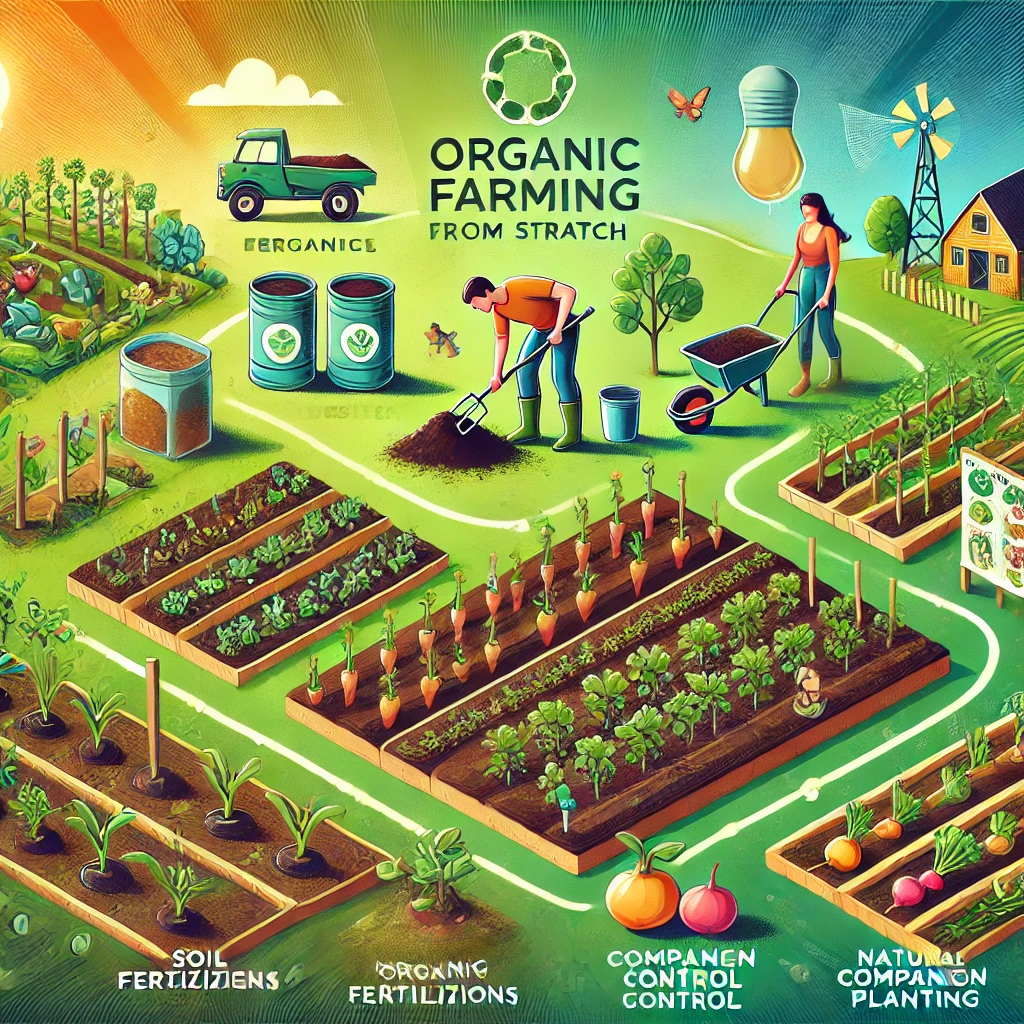
What is Organic Farming?
Organic farming is a method of growing crops without using chemicals. It focuses on natural ways to improve soil health and protect the environment. Farmers use compost, natural fertilizers, and eco-friendly methods to grow crops.
Unlike conventional farming, organic farming avoids pesticides and synthetic fertilizers. It uses crop rotation, green manure, and biological pest control to keep the farm healthy.
Benefits of Organic Farming:
- Healthy and chemical-free food
- Better soil fertility
- Protection of wildlife and ecosystems
- Reduced pollution
If you want to start organic farming from scratch, follow the steps below.
Step 1: Learn About Organic Farming
Knowledge is the first step in organic farming. Start by learning the basics. Read books, watch videos, and talk to experienced farmers.
You can also join online courses and workshops. Learning about organic methods will help you avoid mistakes and build a successful farm.
Where to Learn Organic Farming:
- Organic Farming Research Foundation
- National Organic Program
- Local farming communities and organizations
Invest time in learning, and soon, you will feel confident to take the next step.
Step 2: Choose the Right Land
Land selection is crucial when starting organic farming from scratch. The soil should be healthy and free from chemicals. Find land that has not been treated with pesticides for a few years.
Things to check when choosing land:
- Soil quality and fertility
- Availability of water
- Sunlight exposure
- Distance from pollution sources
Get your soil tested to know its condition. A soil test will tell you what nutrients are missing and how to improve the soil naturally.
Tip: If the land is not organic, you may need a transition period of 2-3 years to remove chemical residues.
Step 3: Plan Your Crops
Planning is key to successful organic farming. Choose crops that suit your climate and soil. Some crops grow better in certain seasons and locations.
Start with easy-to-grow crops like vegetables, herbs, and grains. Organic seeds are important. Always buy certified organic seeds from trusted sources.
Common Organic Crops to Consider:
| Crop | Growing Season | Soil Type |
|————–|—————|————|
| Tomatoes | Summer | Loamy |
| Carrots | Winter | Sandy |
| Lettuce | Spring | Silty |
| Wheat | Fall | Clayey |
Crop rotation is another important step. It helps maintain soil fertility and reduces pests.
Step 4: Prepare the Soil Naturally
Soil is the heart of organic farming. Healthy soil leads to healthy crops. Use organic compost and manure to improve soil quality.
Composting is a great way to provide nutrients to plants. It involves decomposing organic materials like leaves, kitchen waste, and plant residues.
Natural Soil Enrichment Methods:
- Composting
- Green manure (growing cover crops)
- Mulching to retain moisture
- Using earthworms for better soil aeration
Avoid chemical fertilizers. Instead, focus on organic matter to keep the soil healthy.
Step 5: Use Organic Pest Control Methods
Pests can be a challenge in organic farming. But, you can control them using natural methods. Avoid harmful pesticides that can damage the environment.
Use companion planting. It means growing certain plants together to keep pests away. For example, planting basil near tomatoes helps repel insects.
Organic Pest Control Methods:
- Neem oil sprays
- Garlic and chili-based repellents
- Introducing beneficial insects like ladybugs
- Crop rotation to break pest cycles
For more organic pest control tips, visit Rodale Institute.
Step 6: Water Management
Water is essential for crops. In organic farming, it is important to use water wisely. Use rainwater harvesting methods to save water. Drip irrigation is also a great way to deliver water directly to the roots.
Ways to Manage Water Efficiently:
- Install drip irrigation systems
- Collect rainwater in tanks
- Mulch the soil to prevent water loss
- Choose drought-resistant crops if water is limited
Efficient water management reduces waste and keeps the farm sustainable.
Step 7: Get Organic Certification
If you want to sell your products, certification is important. Organic certification proves that your farm follows organic standards.
The certification process includes inspections, paperwork, and regular checks. It ensures that no chemicals are used on your farm.
Steps to Get Certified:
- Follow organic guidelines strictly
- Keep records of farming activities
- Contact an authorized certification agency
- Allow inspections and follow recommendations
Check out the USDA Organic Certification for more details.
Challenges of Organic Farming
Starting organic farming from scratch is rewarding but challenging. It takes time and effort to see results.
Common Challenges:
- High initial costs for organic inputs
- Pest and disease management without chemicals
- Longer time to improve soil health
- Market competition with conventional farmers
However, with patience and dedication, you can overcome these challenges.
Tips for Success
To succeed in organic farming, stay committed and keep learning. Connect with other organic farmers and learn from their experiences.
Tips to Follow:
- Start small and expand gradually
- Be patient, organic farming takes time
- Use social media to promote your organic produce
- Keep detailed records of farming activities
Never give up. Organic farming is a journey, and every step you take makes a difference.
Conclusion
Starting organic farming from scratch is not easy, but it is possible. With the right knowledge, planning, and dedication, you can create a thriving organic farm.
Organic farming helps you grow healthy food while caring for the planet. It is a step towards a healthier future for you and your family.
Take the first step today. Start small, learn, and grow your farm naturally.
I hope this blog inspires you to start organic farming from scratch. Let me know if you need more details!