
The integration of Artificial Intelligence (AI) in financial services is revolutionizing the industry, bringing efficiency, accuracy, and innovation. Financial institutions are leveraging AI to streamline operations, enhance customer experiences, and mitigate risks. As AI technology evolves, its impact on financial services continues to grow, reshaping traditional banking, investment strategies, and risk management.
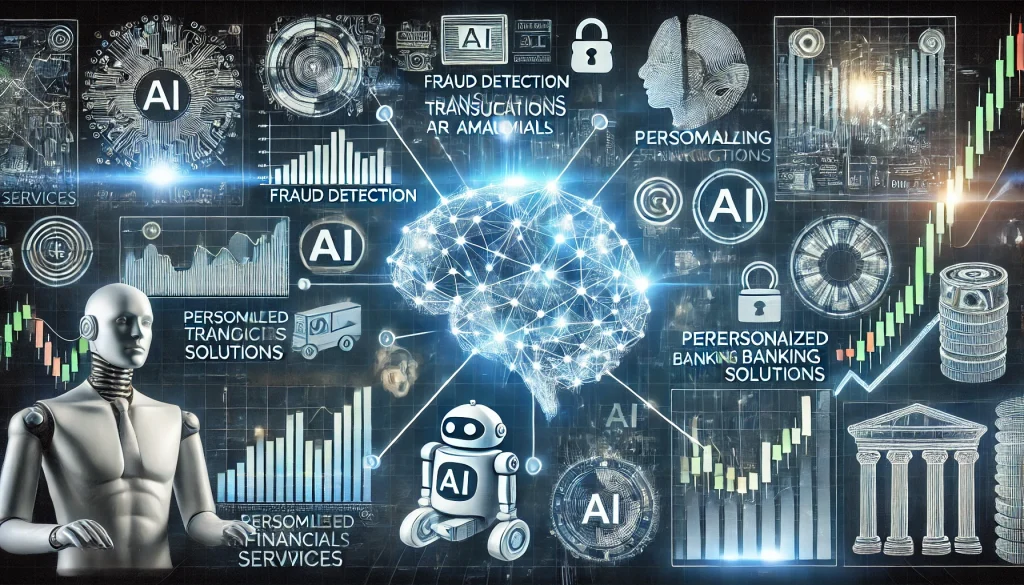
The Role of AI in Financial Services
AI integration in financial services encompasses various applications, including fraud detection, automated trading, credit scoring, and personalized customer experiences. By harnessing machine learning algorithms, natural language processing (NLP), and predictive analytics, financial institutions can make data-driven decisions and improve operational efficiency.
Key Applications of AI in Finance
- Fraud Detection and Prevention:
- AI-powered systems analyze vast amounts of transactional data in real time to identify suspicious activities.
- Machine learning models detect patterns indicative of fraudulent behavior, reducing false positives and enhancing security.
- Automated Trading:
- Algorithmic trading platforms leverage AI to execute high-frequency trades with precision and speed.
- AI models analyze market trends, historical data, and real-time signals to optimize investment strategies.
- Credit Scoring and Risk Assessment:
- AI evaluates creditworthiness by analyzing alternative data sources such as social media activity, transaction history, and behavioral patterns.
- It improves the accuracy of credit risk assessments, benefiting both lenders and borrowers.
- Personalized Financial Services:
- AI-driven chatbots and virtual assistants provide tailored financial advice and support.
- Banks utilize AI to offer personalized product recommendations based on customer behavior and preferences.
Benefits of AI in Financial Services
The adoption of AI in financial services offers numerous advantages, enhancing both operational efficiency and customer satisfaction.
| Benefit | Description |
|---|---|
| Enhanced Efficiency | Automating routine tasks reduces manual intervention. |
| Cost Reduction | AI-driven processes minimize operational expenses. |
| Improved Customer Service | Chatbots provide instant assistance 24/7. |
| Risk Mitigation | Advanced analytics help in better risk management. |
| Fraud Prevention | Real-time anomaly detection enhances security. |
Challenges of AI Integration in Financial Services
Despite its advantages, AI integration in financial services comes with several challenges that need to be addressed for successful implementation.
- Data Privacy and Security: Financial institutions handle sensitive customer data, making cybersecurity a top priority.
- Regulatory Compliance: Adhering to financial regulations and ethical AI practices is crucial to avoid legal repercussions.
- Implementation Costs: The initial investment in AI infrastructure and talent can be significant.
- Bias and Fairness: Ensuring AI models are unbiased and ethical is essential to maintain customer trust.
Future Trends in AI for Financial Services
As AI technology continues to evolve, financial institutions are expected to witness several emerging trends shaping the future of the industry.
- Explainable AI (XAI): Providing transparency in AI-driven decisions to build trust and compliance.
- AI-powered Robo-Advisors: Offering intelligent investment guidance with minimal human intervention.
- Blockchain Integration: Enhancing security and transparency in financial transactions through AI-enabled blockchain solutions.
- Hyper-personalization: Delivering highly customized financial solutions based on individual preferences.
- AI-driven Regulatory Technology (RegTech): Ensuring compliance with ever-evolving financial regulations through automation.
Conclusion
AI integration in financial services is transforming the industry by enhancing efficiency, reducing costs, and improving customer experiences. While challenges exist, the benefits outweigh the obstacles, making AI an indispensable asset for financial institutions. As AI technology continues to advance, embracing its potential will be crucial for staying competitive in the ever-evolving financial landscape.
AI Integration in Financial Services: Transforming the Future of Finance As AI technology evolves, it is reshaping the financial services industry, driving efficiency, cost reduction, and improved customer experiences. While challenges exist, the benefits of AI integration in financial services outweigh obstacles, making it an essential asset for institutions. Embracing AI’s potential is crucial for staying competitive in the ever-changing financial landscape and achieving operational excellence in today’s complex ecosystem.